How an MSP spots an at-risk client before it’s too late
Sample account, demo data
A client rarely looks at risk until it’s too late. The signals are already in your data, but read late they look like churn, and read early they look like growth. Follow one sample account to see the turn Prioriwise tells you to take.
The blind spot
Fourteen accounts look healthy. One is quietly going wrong.
The dashboard is green, the invoices clear, and the account that is drifting looks exactly like the ones that aren’t.
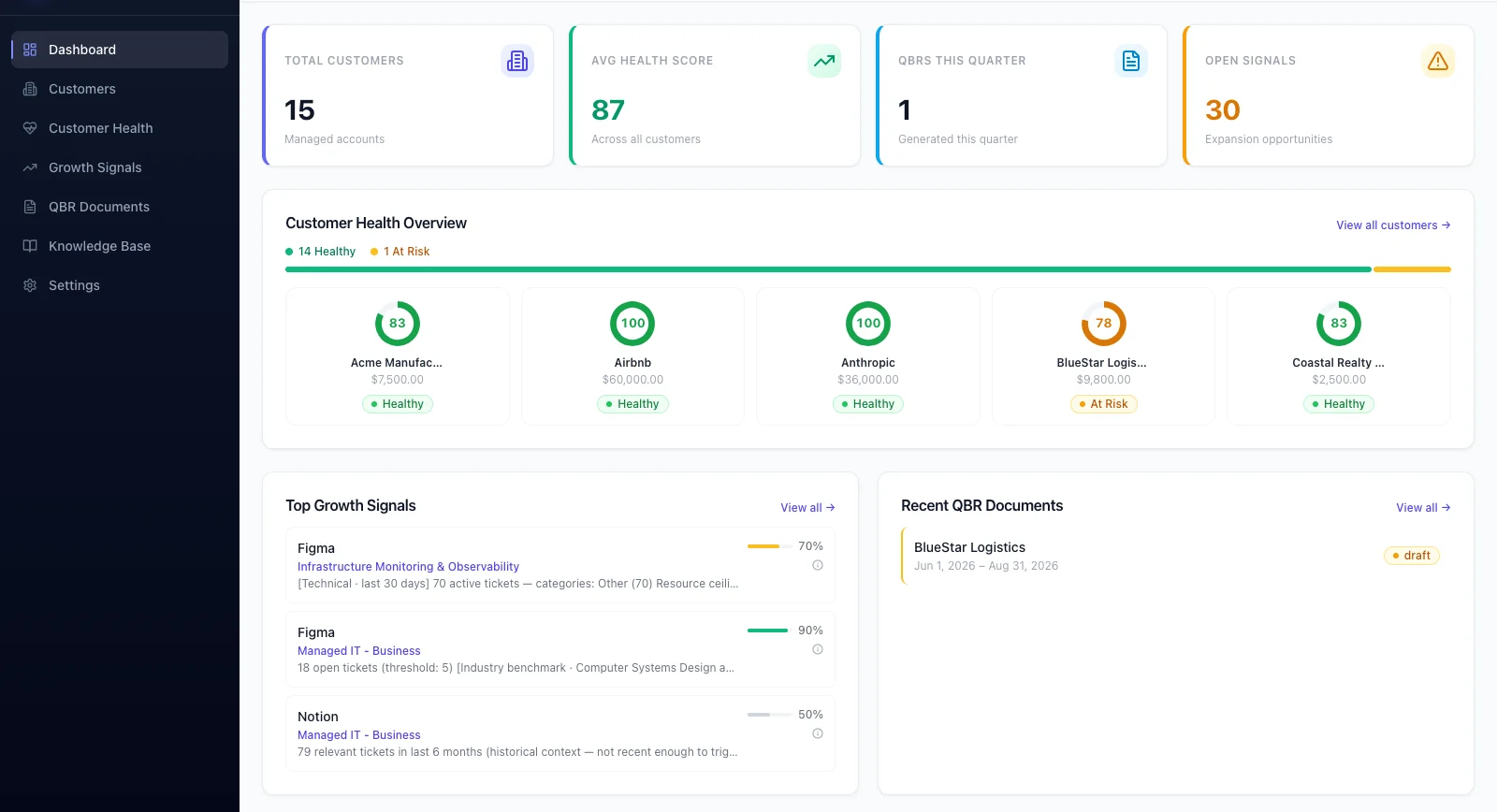
Fifteen clients. Fourteen of them healthy. This is the screen you live on — and it’s the screen that hides your problem.
Read the full narration
The blind spot
Fifteen clients. Fourteen of them healthy. This is the screen you live on — and it’s the screen that hides your problem.
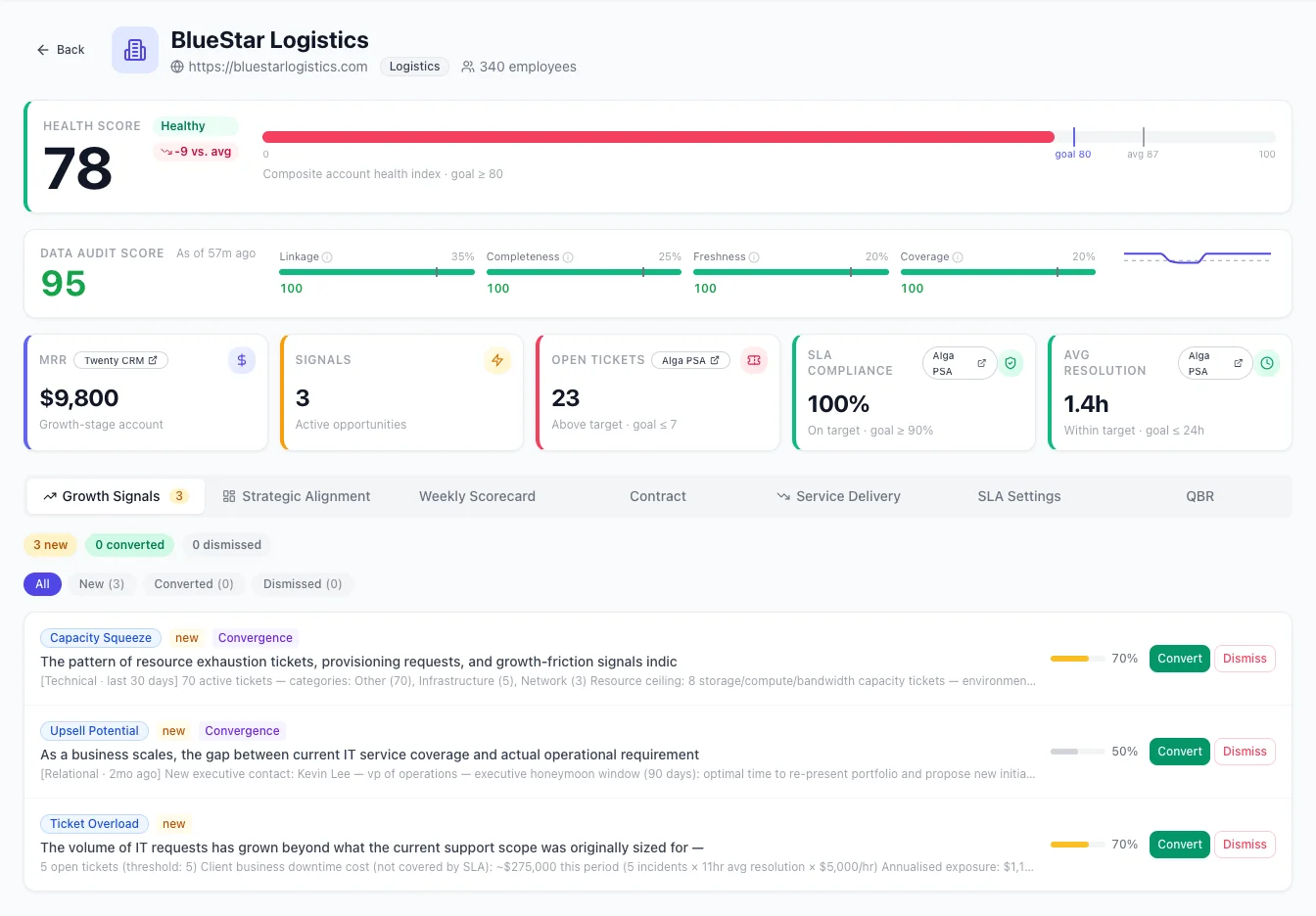
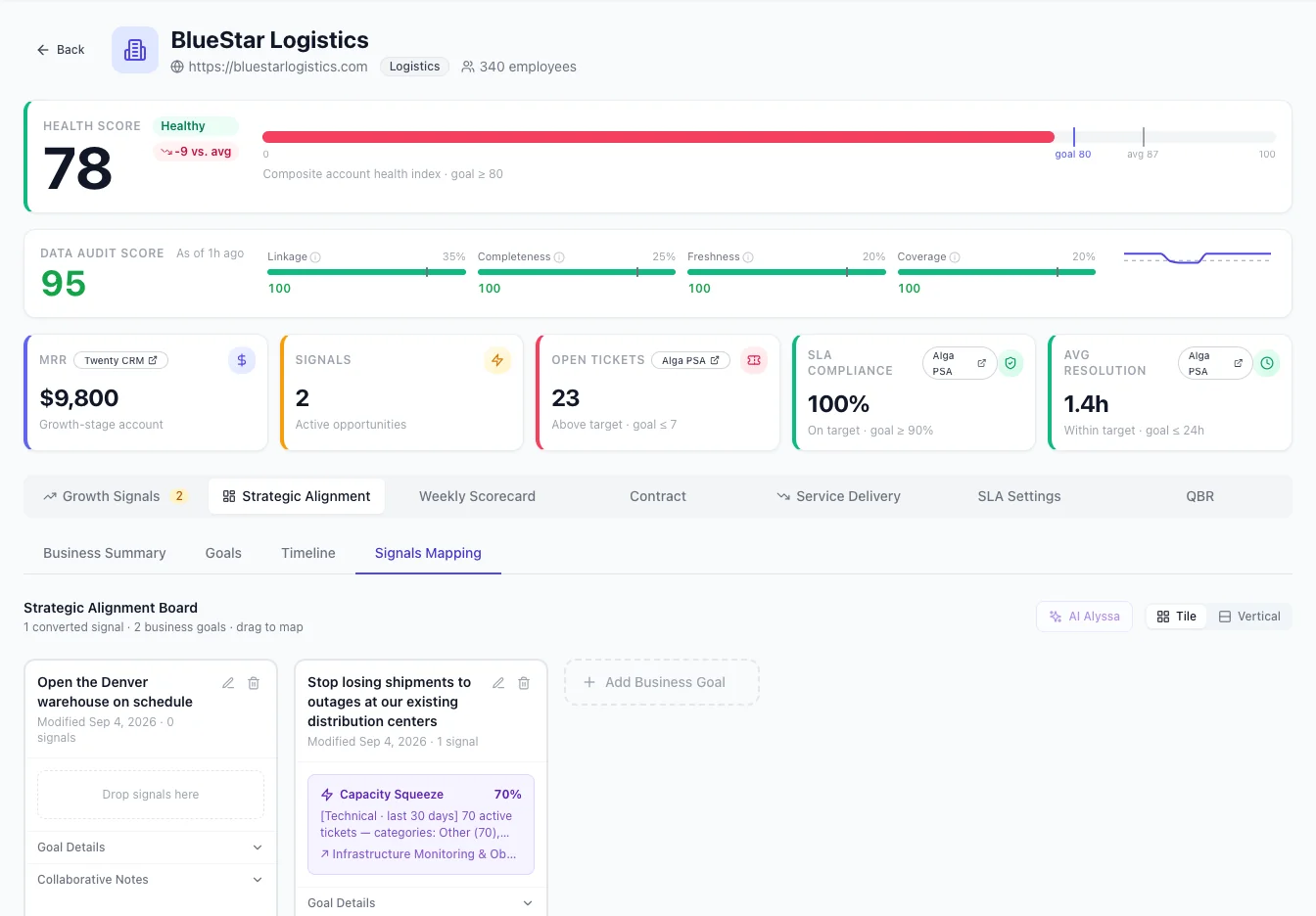
Health of seventy-eight, against a goal of eighty. Nine points under the portfolio average. Not a fire — which is exactly the problem. Nobody escalates a seventy-eight.
Where the risk actually is
Service levels: a hundred percent. Average resolution: under an hour and a half. By every number in the contract, this team is doing everything right. And yet — twenty-three open tickets against a target of seven. The work is piling up underneath a passing grade.
The expansion signal
Now the same data, read a different way. Three growth signals — nobody went looking for these. They were raised from ticket history, contact records and CRM notes the team already had.
This one is tagged ‘convergence’ — it only fires when independent evidence agrees. Seventy active tickets. Eight of them hitting a hard resource ceiling: storage, compute, bandwidth. Eight more are requests to provision new people. That is not a support problem. That is a company outgrowing its environment.
And it’s sized — two to five and a half thousand a month, for infrastructure monitoring. Priced off the service catalogue and this client’s tier, not a number somebody guessed in a spreadsheet.
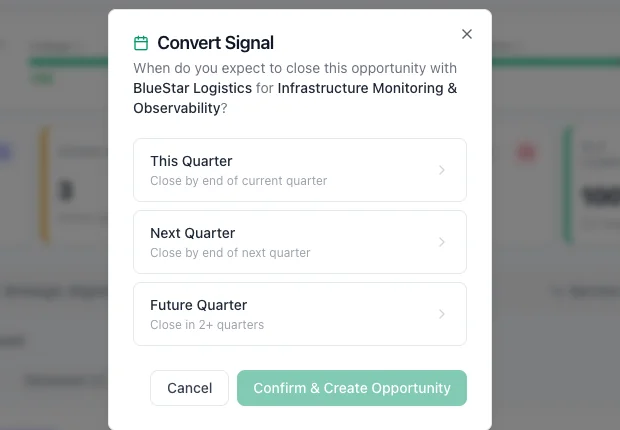
One click, and it stops being an insight. It’s a real opportunity, written back into the CRM, in the pipeline the sales team already works from.
Strategic alignment
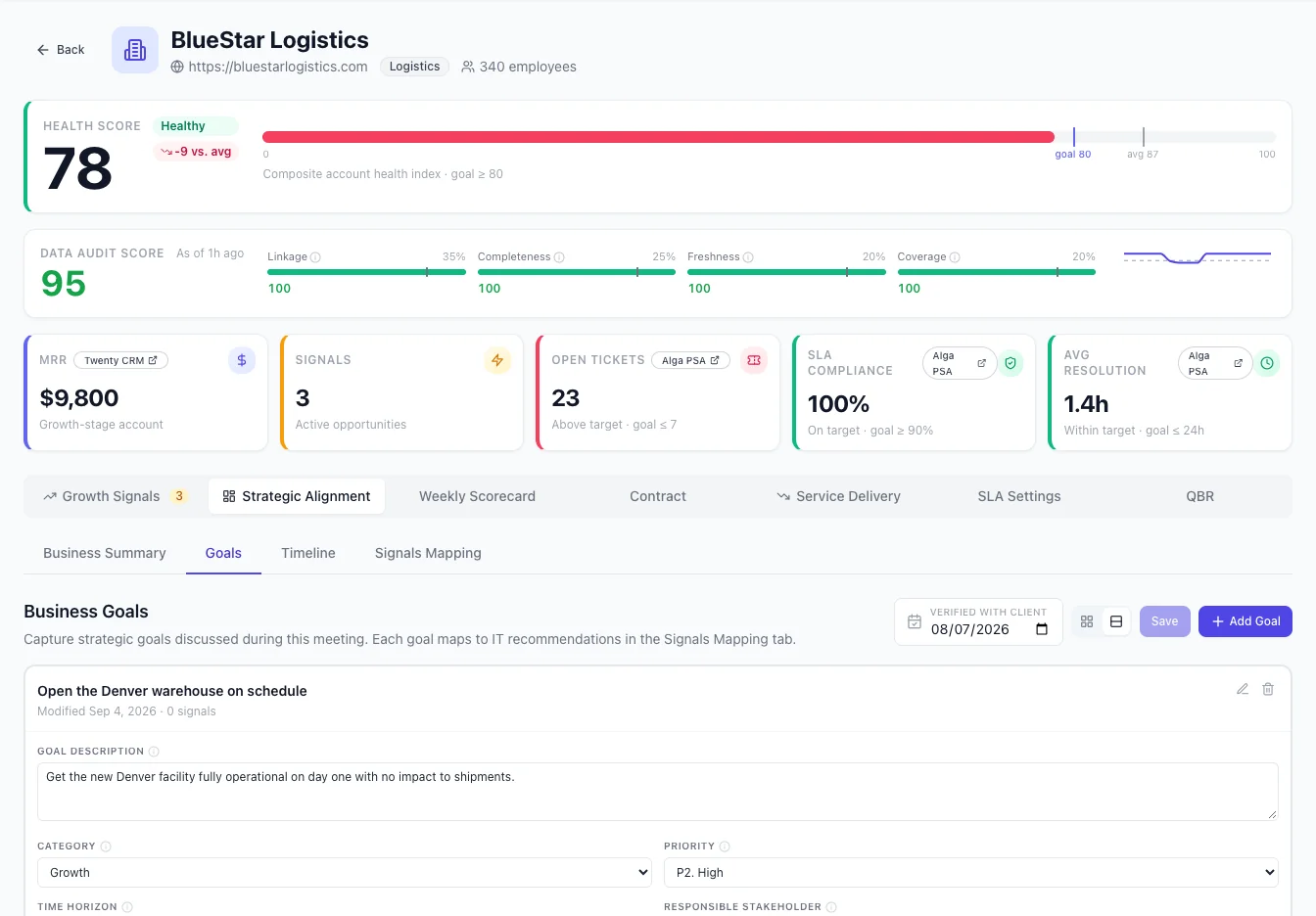
Here’s what this client actually cares about, in their own words. Open the Denver warehouse on schedule. Stop losing shipments to outages at the existing sites. Notice what these are not — there’s no ticket count, no uptime percentage. These are the things their executives are judged on.
So: does the opportunity we just created actually serve either of those goals? Connecting a ticket pattern to a boardroom objective is judgment work. It’s the part of this job that normally costs an experienced strategist an afternoon per account.
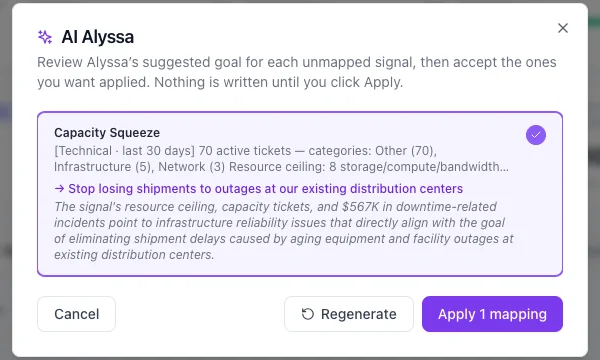
It maps the capacity signal to the shipment-reliability goal — and it tells you why. Resource ceiling, capacity tickets, and five hundred and sixty-seven thousand dollars of downtime-related incidents, all pointing at infrastructure reliability. That’s the argument you’d make to the client, written out.
And nothing is written until a person accepts it. The model proposes and explains. It never silently changes the client record.
The quarterly review
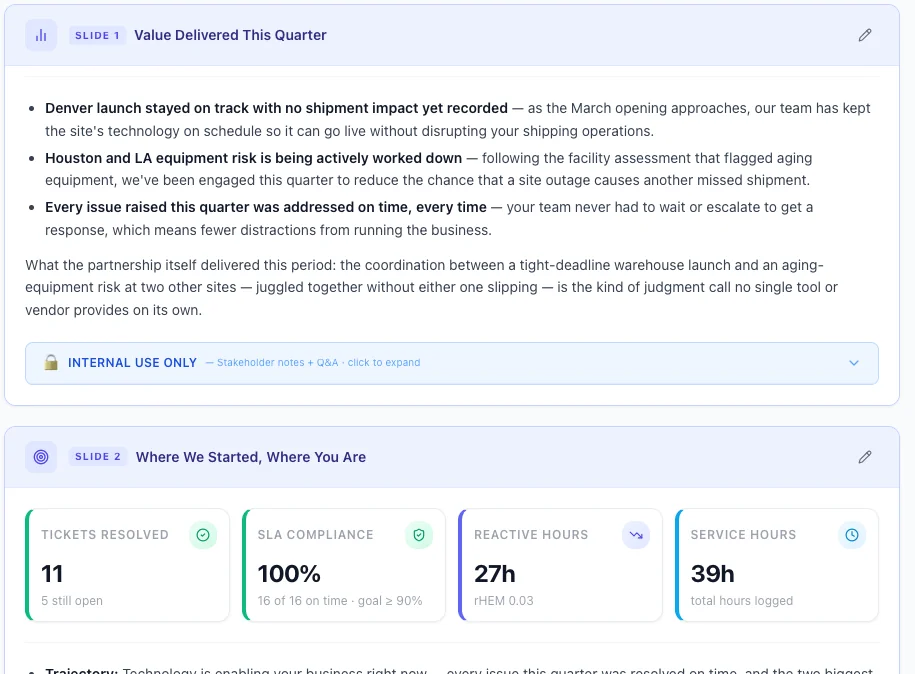
All of it feeds the quarterly business review. Eight sections, written from this account’s own tickets, goals, contract and industry data.
Read that language. ‘Every issue raised this quarter was addressed on time — your team never had to wait or escalate.’ No jargon. No ticket IDs. That is a sentence an executive reads without translation.
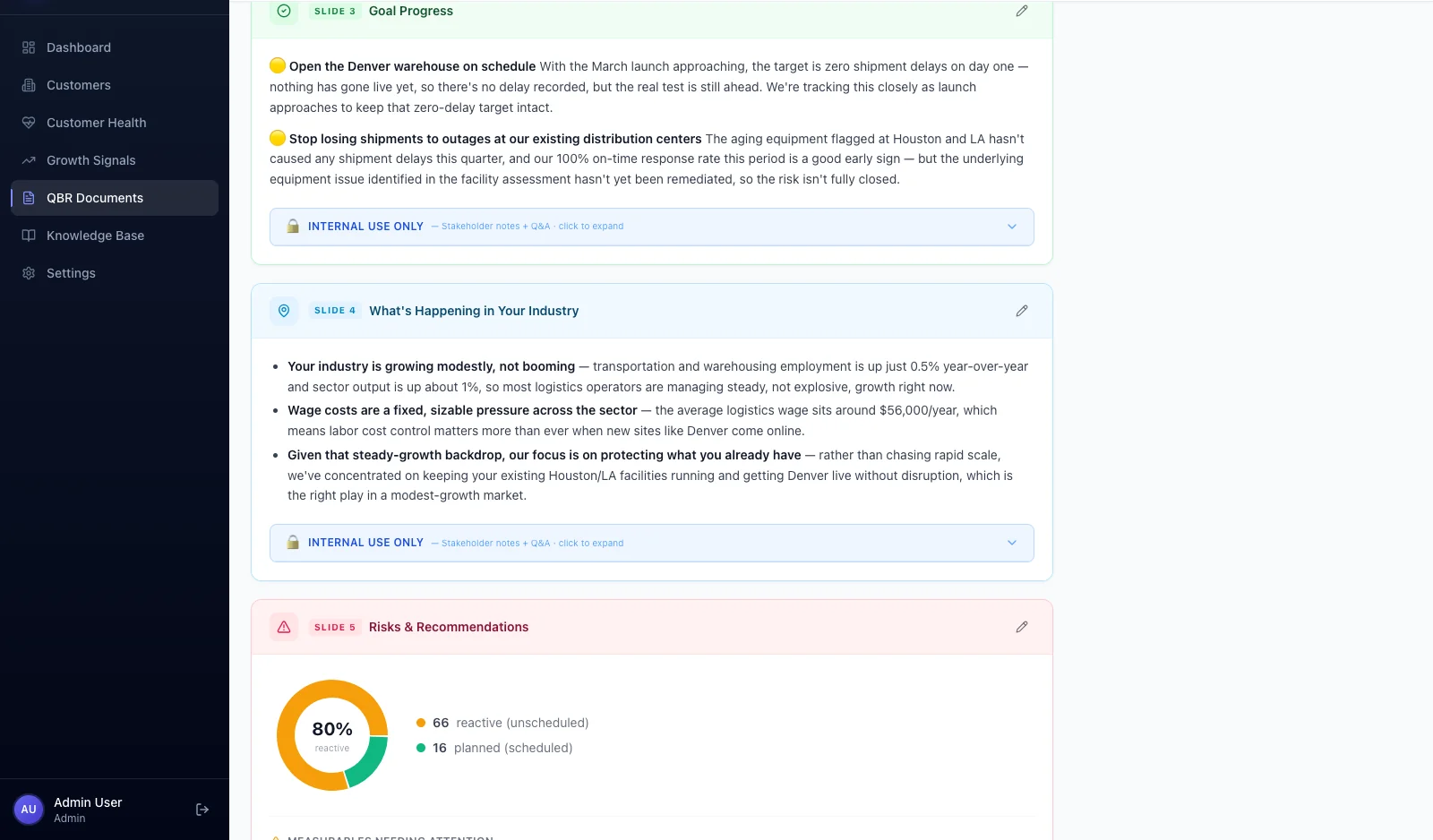
And each goal gets a straight answer. This one’s amber — the equipment risk hasn’t been remediated, so it says the risk isn’t closed. It reports the amber, not just the green. That’s the difference between a report you send and a report you trust.
It even reads their industry — real employment, output and wage data for transport and warehousing — and uses it to argue why this quarter’s plan is the right one.
Close
One client account. Health, risk, a priced opportunity, mapped to the client’s own goal, and the review that proves it. Prioriwise — never lose a client you could have kept.
Ready to experience it for yourself?
Book a demo