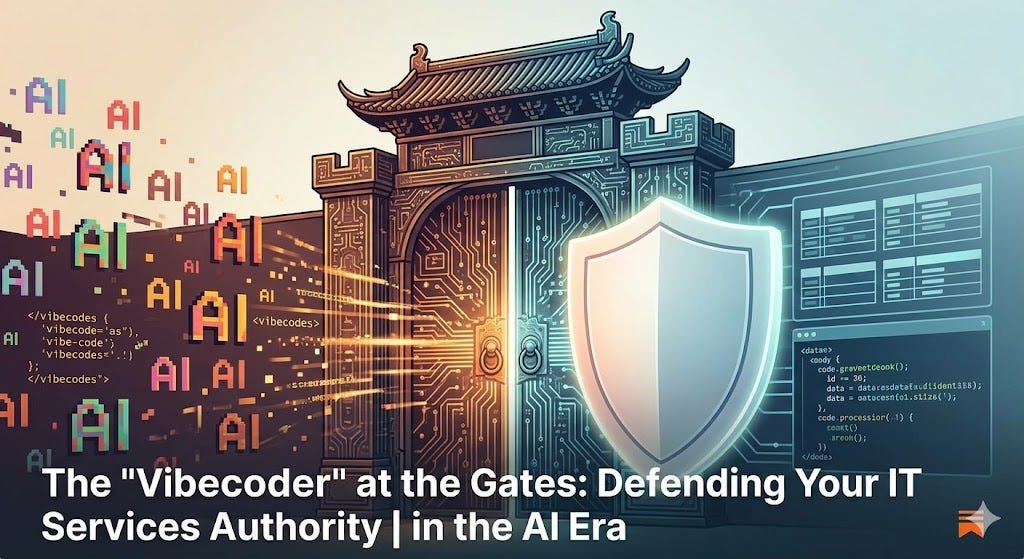
The "Vibecoder" at the Gates: Defending Your IT Services Authority in the AI Era
Why Arguing Over Code Quality is a Losing Game—and How to Pivot to a Liability-First Defense
The Inciting Incident
It usually starts with a casual, almost apologetic email on a Tuesday morning. “Hey, my nephew showed me this tool on TikTok...” or “I played around with this new AI bot, and it wrote the script I’ve been asking your team for in seconds. Do we still need the full dev-ops retainer?”
For the IT Service Provider Owner or MSP owner, this is the birth of the “Vibecoder” threat. It’s the moment a client who is blinded by the shimmer of a “magic” AI demo begins to view your carefully constructed, multi-layered security stack as an overpriced relic. They see the code output, but they’ve lost sight of the professional outcome.
The Problem: Technical Logic vs. Emotional Hype
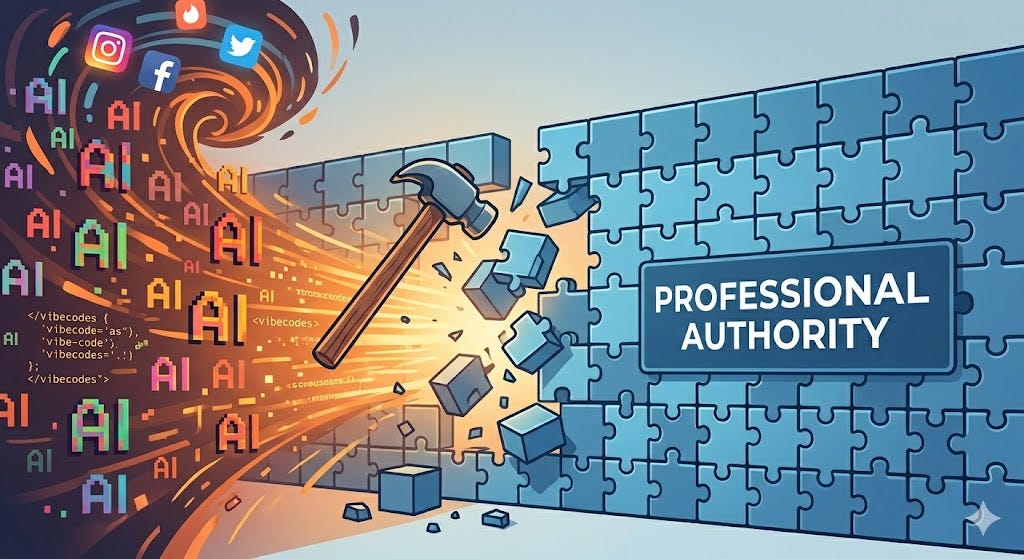
The tension here isn’t actually about whether the AI can code; it’s about the erosion of professional authority. AI has democratized “the appearance of competence.” When a non-technical stakeholder can generate a functional script, they feel a rush of power. What they lack is the context of dependency management, security debt, and operational lifecycle.
If you argue about the code quality, you just sound like a defensive gatekeeper. You’re trying to win with logic in a situation driven by emotion. You are fighting a technical battle in an emotional war.
The Strategic Pivot: Building the “Liability Moat”
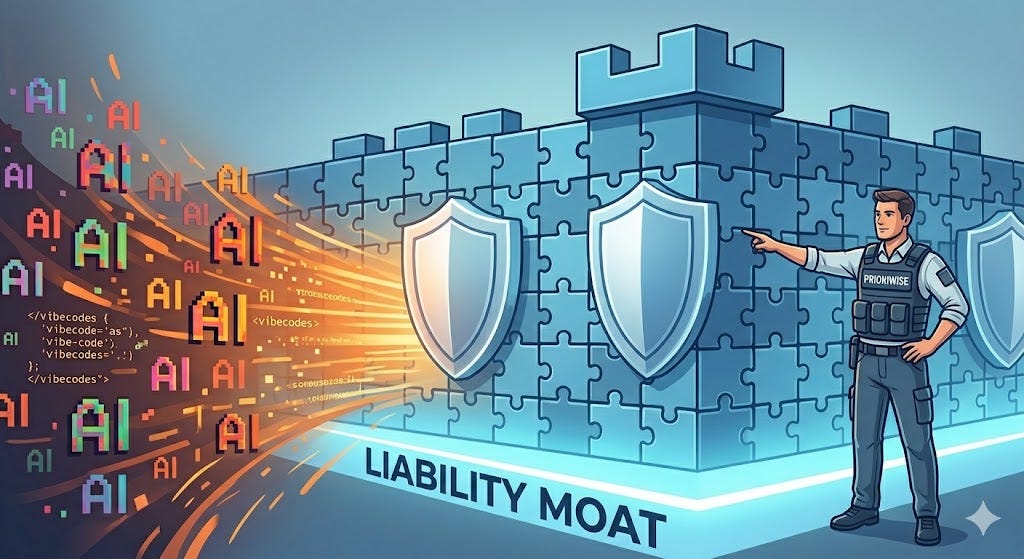
To win, you have to shift the narrative from output to Accountability. Your “moat” isn’t your tech stack; it’s your willingness to stand behind the results when the “vibes” turn into a data breach.
The Leadership Playbook

When a client brings up a “cool AI tool” they found, they aren’t just talking about software; they are testing your relevance. To defend your authority, you must pivot the conversation from code output (which is cheap) to business liability (which is expensive).
1. The “Accountability Audit”: Don’t dismiss the tool’s output. Instead, ask the “Life Cycle” questions: “This script works today, but who is on point to patch it when the API changes? Who is liable if this unvetted code creates a back-door for a breach?” Shift the focus from “doing the work” to “owning the risk.”
2. Establish “Shadow AI” Governance: Position your MSP as the guardrail, not the gatekeeper. Implement a policy where clients can experiment with AI, but only within a “Sandboxed Governance” framework you provide. This keeps you in the loop and ensures you are the one documenting the non-compliance risks.
3. Measure “Asset Integrity” over “Tasks”: Change your reporting. Instead of showing “Scripts Written” or “Hours Worked,” report on “Verified Secure Assets.”
The Takeaway: Your value isn’t your ability to write code; it’s your ability to ensure that code doesn’t become a business-killing liability three months from now. Sell the sleep, not the script.
Side Note: Inspired by the “Vibecoder” phenomenon—where AI-generated tools found on social media are being used by non-technical stakeholders to challenge professional service value.
Thank you for reading.
Urvashi Batra
(Cofounder/CEO of Prioriwise)
Disclaimer: The core ideas and strategic insights within this article are the original work of the author, reflecting real-world experience in the IT services sector. AI was utilized as a collaborative tool to assist in data structuring, drafting, and refining the presentation of these concepts.
Ready to stop reacting and start predicting?
See how Prioriwise turns your delivery data into a live Relationship Health Score for every client.
Get Started