The Role of CX in Long-Term MSP Growth
How great customer experience fuels retention, trust, and long-term growth for modern MSPs
Why CX Matters More Than Ever for MSPs
Most MSPs compete on similar technical capabilities: monitoring, security, backups, cloud, and support. Tools can be copied, pricing can be undercut, and features can be matched. What is far harder to copy is how clients feel working with you—how responsive you are, how clearly you communicate, and how consistently you deliver on what you promise.
That feeling is customer experience (CX), and in 2025 it is becoming a core growth lever. Strong CX is what turns “just another IT vendor” into “our trusted partner.” Forbes highlights that consistent, human, and reliable experiences are what keep customers loyal, confirming that CX is now the new competitive battleground. It is what keeps clients renewing through leadership changes and budget pressures. And it is often the difference between a relationship surviving a mistake versus ending over a single bad incident.
CX as the Foundation of Retention and Lifetime Value
Recurring revenue only works if clients stay. The challenge is that most cancellations (or quiet RFPs) do not come out of nowhere—they build over months of small frustrations: unclear updates, slow follow-ups, misaligned expectations, or a sense that the MSP is reactive rather than invested.
A strong CX strategy addresses this head-on by:
Setting clear expectations around communication, response, and escalation.
Making it easy for clients to understand what is happening and why.
Ensuring issues are acknowledged quickly, even if they cannot be resolved immediately.
When clients consistently feel heard, supported, and respected, they are far more forgiving of the occasional misstep. According to Zendesk’s Customer Experience Statistics, companies focused on CX see substantial revenue and profit lifts, reinforcing your point that CX underpins long-term recurring revenue. Retention stops being about perfection and starts being about reliability and trust—two things CX is uniquely positioned to build.
Trust: The Real Currency of Long-Term Growth
Trust is what allows MSPs to move beyond “keep the lights on” support and into higher-value advisory work. Without trust, every recommendation is second-guessed and every price increase feels threatening. With trust, clients are more open to new ideas, more patient during complex projects, and more inclined to give feedback instead of silently disengaging.
Customer experience is how trust is built in day-to-day interactions. IBM’s Top Customer Experience Trends emphasizes that reliability, consistency, and clear communication across touchpoints are key to building loyalty and trust.
Transparent explanations instead of technical jargon walls.
Owning mistakes quickly and outlining clear remediation steps.
Following through on commitments, even when they are inconvenient.
Over time, this consistency compounds. When a major decision comes—a migration, security overhaul, or new system rollout—the MSP that has invested in CX has the inside track. The client is already conditioned to believe, “They have got us.”
Turning Everyday Interactions Into CX Moments
CX is not just about big events like outages or Quarterly Business Reviews (QBRs). It is heavily shaped by the thousands of micro-interactions across tickets, emails, calls, and status updates. Each of those touchpoints is an opportunity to either reinforce or erode confidence.
Modern MSPs elevate these interactions by:
Using clear, human language in ticket and project updates.
Providing context (“why this matters”) and next steps, not just technical fixes.
Closing the loop with stakeholders after issues are resolved or changes go live.
This does not require fancy gestures—just consistent, thoughtful communication. Over time, clients start to feel like they always know where they stand. That emotional stability is a powerful differentiator in a world where many providers still communicate only when pushed.
Proactive Communication and Consistent Delivery
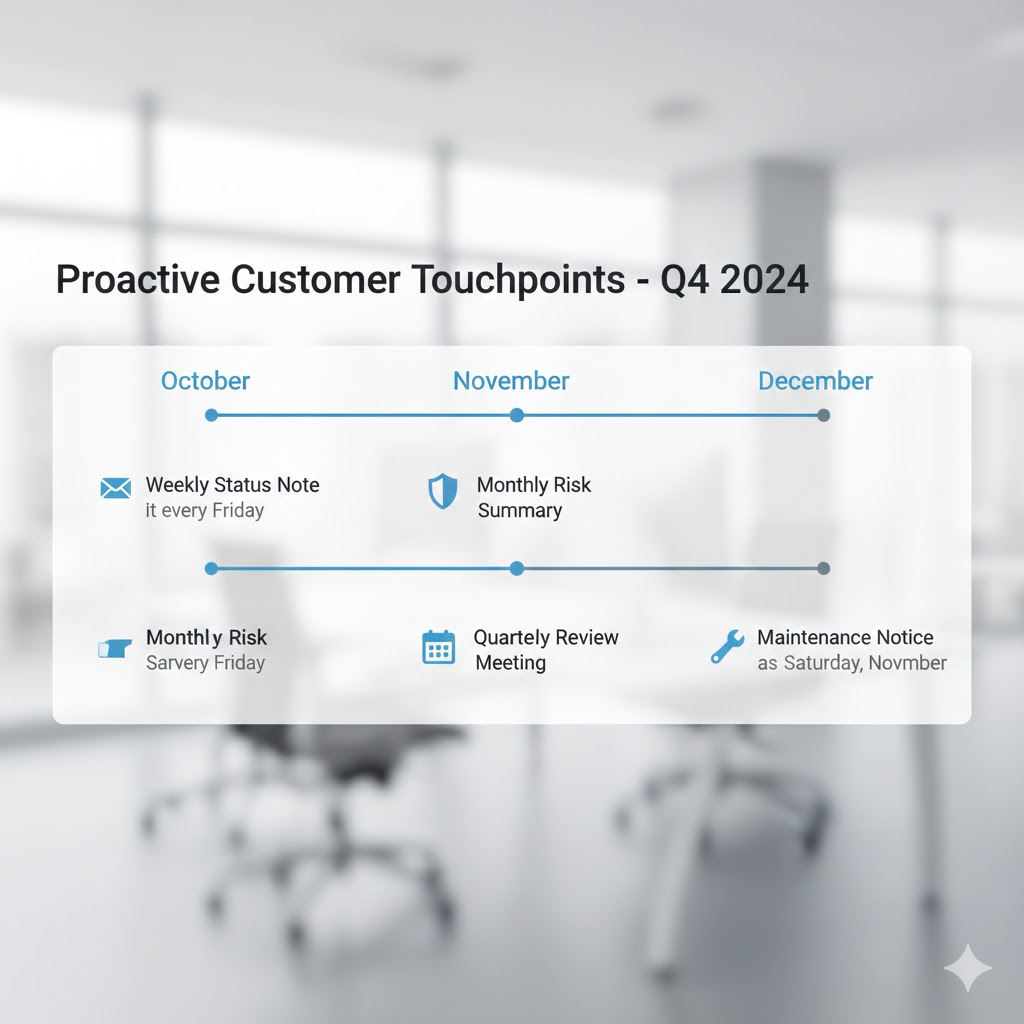
Great CX is proactive, not reactive. Instead of waiting for clients to chase updates or escalate frustrations, strong MSPs reach out first. They share what is happening in the background, what is changing, and what risks they are watching.
Practical examples include:
Regular, short status notes on ongoing projects.
Heads-up messages when maintenance or policy changes might affect users.
Simple monthly or quarterly summaries of key improvements and open risks.
Consistency is key—both in service delivery and in how information is shared. When clients know what kind of experience to expect, your MSP becomes predictable in the best way. AvePoint’s blog on MSP Retention ties improved CX directly to better retention, emphasizing that predictability reduces anxiety, builds confidence, and makes it much easier for decision-makers to justify staying with you year after year.
CX as a Growth Driver: Referrals, Upsells, and Expansion
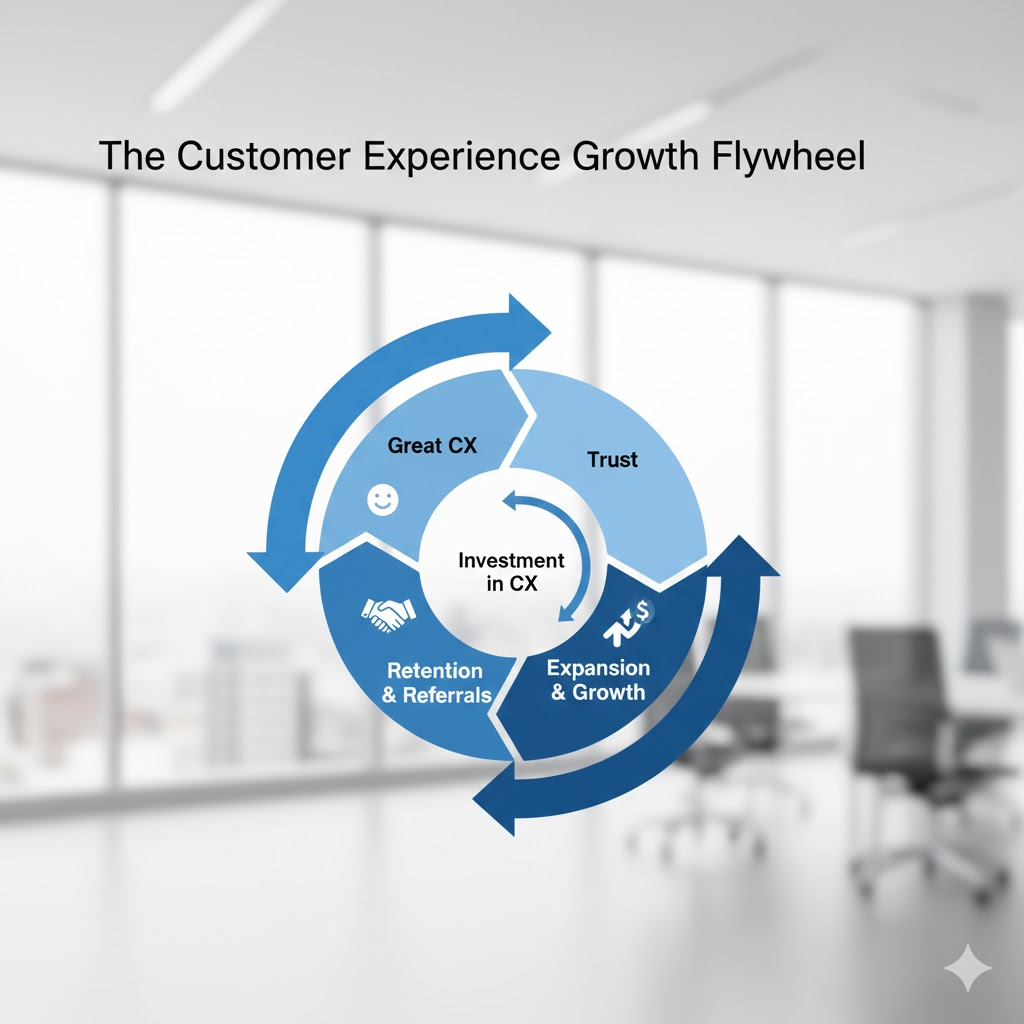
Happy, well-served clients do not just stay; they help you grow. Strong CX creates:
Referrals to peer companies, sister organizations, or new departments.
Easier upsell and cross-sell conversations because recommendations are trusted.
Expansion into new sites or business units when the client grows.
When clients feel cared for and confident, they are more open to hearing about new services—and more likely to ask: “What else could you help us with?” Datagate’s MSP Marketing Strategies explain that referrals remain highly effective when backed by strong CX. Instead of starting from a defensive position, your sales and account teams begin from a foundation of goodwill built by CX.
Building a CX Strategy That Actually Scales
The risk with CX is relying on “hero” individuals—the standout account manager or senior engineer who always seems to rescue situations. That is not a strategy; it is a liability. To drive long-term growth, MSPs need CX that is systematic and scalable.
That means:
Documented standards for communication (tone, frequency, content).
Clear ownership for client relationships, backed by shared visibility.
Playbooks for common scenarios (onboarding, incidents, major changes, renewals).
Async-friendly tools and workflows so updates and decisions are not trapped in meetings.
This approach is validated by reports aggregated by CXQuest, which show that successful CX programs rely on systematized processes, technology support, and cross-team alignment. With this foundation, great CX becomes something your whole organization can deliver, not just your “best people.” And as you grow, you can maintain the same level of experience across a larger client base without burning out your team.
Final Thoughts
In a market where technology stacks look increasingly similar, customer experience is becoming one of the most durable growth assets for MSPs. It turns reactive support into long-term partnership, transforms everyday interactions into loyalty-building moments, and creates the trust needed for renewals, referrals, and expansion.
MSPs that treat CX as a strategic discipline—not an accident of personality—will be the ones with the most resilient, predictable, and profitable growth in the years ahead
Ready to stop reacting and start predicting?
See how Prioriwise turns your delivery data into a live Relationship Health Score for every client.
Get Started