The Ghost in the Boardroom: Ending the "Out of the Blue" Churn
Identifying the "Silent Divorce" Signals Hidden in Your Unstructured Client Data
The Narrative: The Silent Divorce
It’s the “best” kind of client. They never call. They never complain. Their invoices are paid on time, every time. You focus your energy on the “squeaky wheels” because, surely, the quiet ones are happy. Then, one Friday afternoon, the “Notice of Non-Renewal” hits your inbox.
There was no explosion. There was no catastrophic outage. There was only a slow, silent drift. While you were busy fixing servers, the client’s business changed, and you weren’t part of the transition.
The Problem: The Myth of the “Content” Client
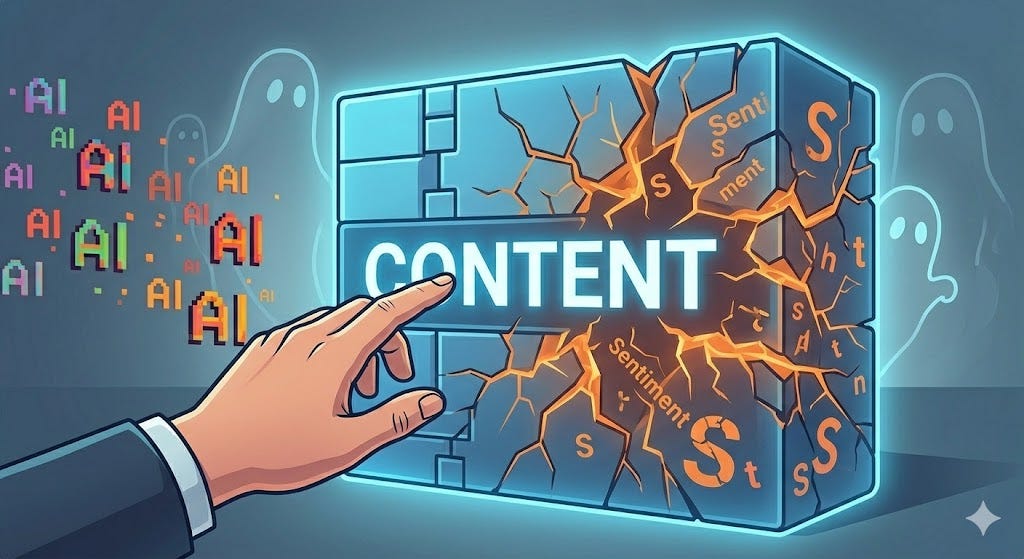
“Out of the blue” churn is a myth. Churn is almost always preceded by a paper trail—it’s just buried in the silence of unstructured data. It happens when your primary champion leaves, when a new CFO arrives, or when your technical success becomes so consistent that it becomes invisible.
If you aren’t actively mapping your technical delivery to the client’s current executive goals, you are operating on an outdated version of their reality.
The Strategic Pivot: Surfacing the Silent Signals
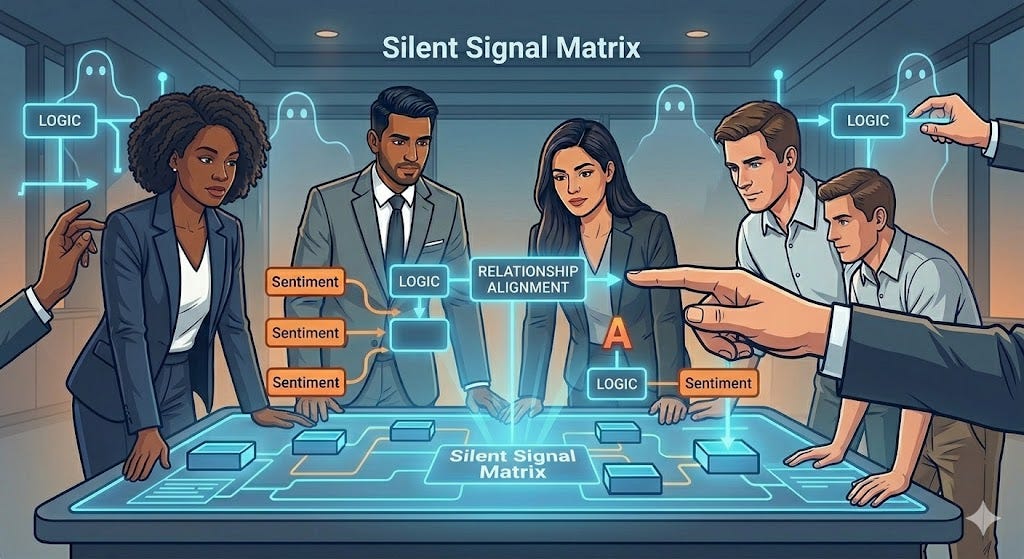
To survive, we have to treat “quiet” accounts with more urgency than the loud ones. We need an “Early Warning System” that isn’t based on ticket alerts, but on Relationship Health.
The Leadership Playbook
The most dangerous client is the one you haven’t heard from in 90 days. “Silent” is not “Satisfied”but rather “Disengaged.” You must surface the signals of a “Silent Divorce” before the non-renewal notice arrives.
1. Map the “Power Map” Quarterly: Relationships aren’t with companies; they are with people. If your primary champion leaves or a new executive is hired, the account is automatically “At Risk.” Your playbook must include an immediate “Executive Introduction” sequence for every new stakeholder.
2. Monitor “Engagement Velocity”: Track unstructured data like email response times, meeting attendance, and even the “tone” of ticket notes. A sudden shift from friendly to formal (or total silence) is a leading indicator of churn.
3. The “Executive Summary” Pulse: Send a monthly, 3-bullet-point email to the CEO. “1. We blocked X. 2. We optimized Y. 3. This saved you Z hours.” It keeps your value “top of mind” without requiring them to log into a portal.
The Takeaway: Churn is a slow leak, not a sudden burst. If you aren’t actively monitoring relationship health and executive alignment, you are essentially “ghosting” your own clients. Visibility is the only antidote to invisibility.
Side Note: Inspired by the frequent “solo MSP” horror stories where long-term, “quiet” accounts are lost due to lack of executive-level visibility.
Thank you for reading.
Urvashi Batra
(Cofounder/CEO of Prioriwise)
Disclaimer: The core ideas and strategic insights within this article are the original work of the author, reflecting real-world experience in the IT services sector. AI was utilized as a collaborative tool to assist in data structuring, drafting, and refining the presentation of these concepts.
Ready to stop reacting and start predicting?
See how Prioriwise turns your delivery data into a live Relationship Health Score for every client.
Get Started