Stop Preparing for Quarterly Business Reviews (QBRs) with Fingers Crossed
How MSPs can turn reactive data dumps into strategic revenue conversations.
The night before your big QBR presentation with your most important client, it hits you: the business goals you captured last quarter might be completely obsolete. Worse, there was zero follow-up to track how those goals were being measured.
You hope and pray, fingers crossed, that you won’t face an embarrassing moment where everything has changed since you last spoke. Realistically, luck won’t save you tomorrow.
The Core Problem: Most QBRs fail because they review past IT activity instead of planning future business outcomes. When you align tech decisions directly with client strategy, QBRs shift from awkward account reviews to natural expansion conversations
Here is how to stop relying on luck and turn your QBRs into structured business outcome reviews.
The QBR Is Not a Quarterly Data Dump
Too many MSP QBRs begin with a polished slide deck and end with the same uncomfortable realization: the client’s priorities shifted weeks or months ago.
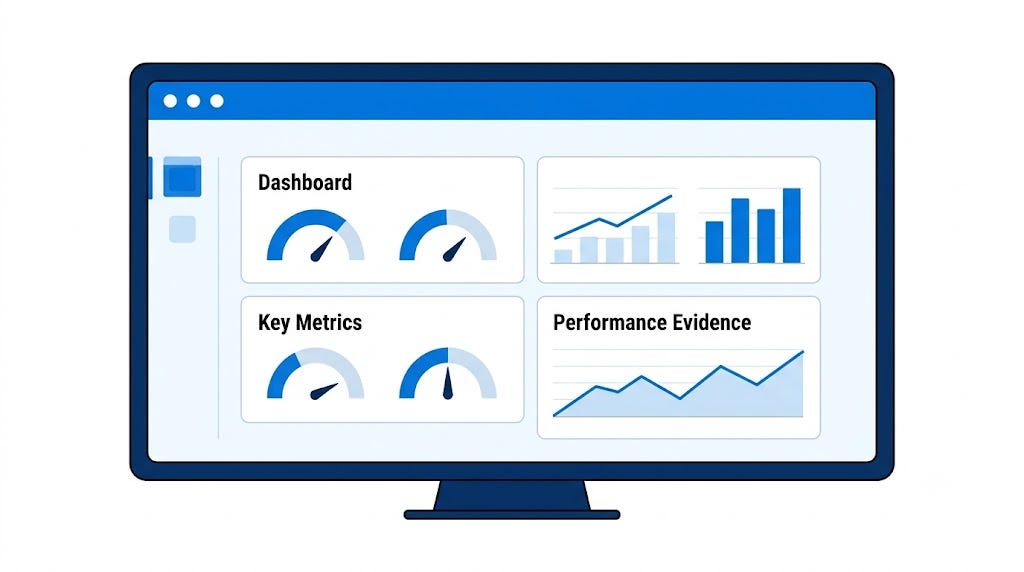
Maybe they acquired a company, lost a major customer, opened a new location, hired aggressively, faced new compliance requirements, or tried to slash operating costs. Meanwhile, the MSP arrives ready to discuss ticket counts, patching percentages, uptime, and antivirus status.
Those metrics matter but they are evidence, not the conversation. A valuable review connects service performance and technology decisions to the customer’s current business objectives. It should answer one core question: What are we helping this business accomplish next?
Don’t Wait Until the QBR to Discover Change
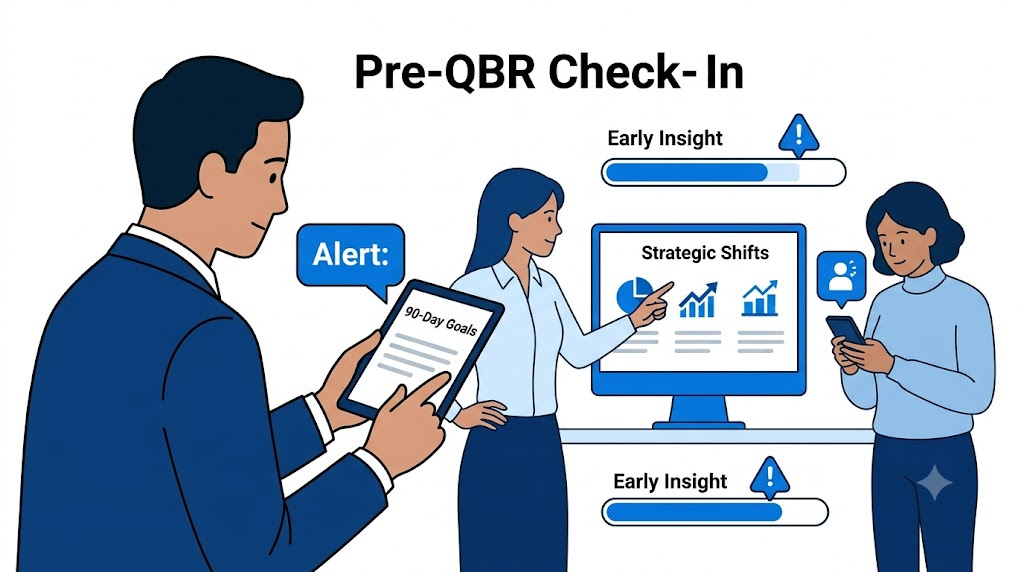
The night before a meeting is too late to find out whether your assumptions are still correct. Strategic accounts need a regular cadence for updating business context between formal reviews.
Two to three weeks before the meeting, send a short pre-QBR check-in1 to your client sponsor asking:
Strategic Shifts: What has changed in the business since our last review?
90-Day Goals: What are the three most important initiatives for the next quarter?
Operational Friction: What is creating the most friction for your team today?
Upcoming Changes: Are there pending changes in staffing, locations, software, compliance, or budgets?
Success Criteria: Which business outcomes should technology help improve, and how will you measure success?
For smaller accounts, a lightweight questionnaire works well. For strategic accounts, cover these questions during an executive check-in. Business priorities shift quickly. As a result, higher-value clients should never be left on autopilot.
Turn Vague Objectives into Measurable Goals
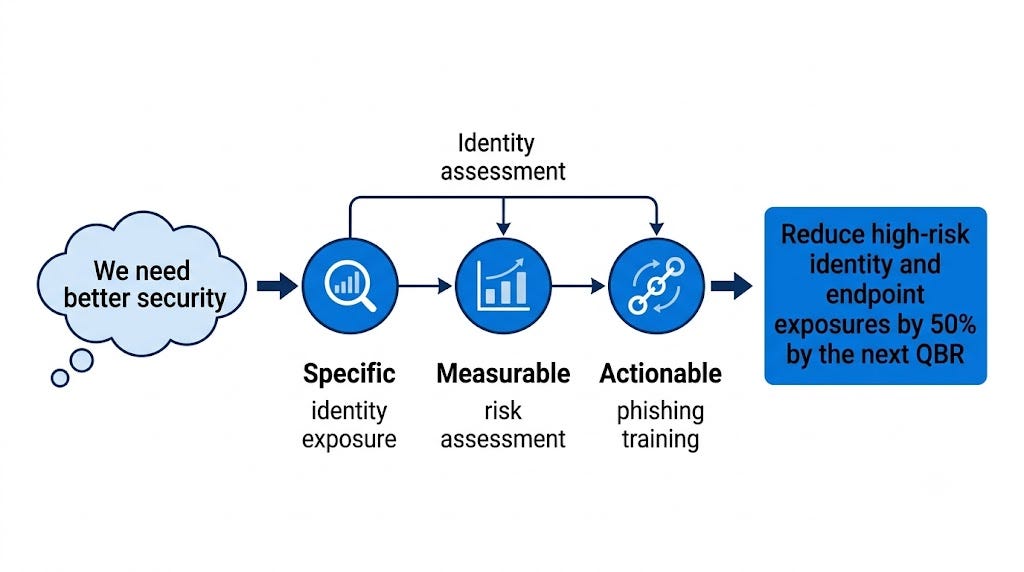
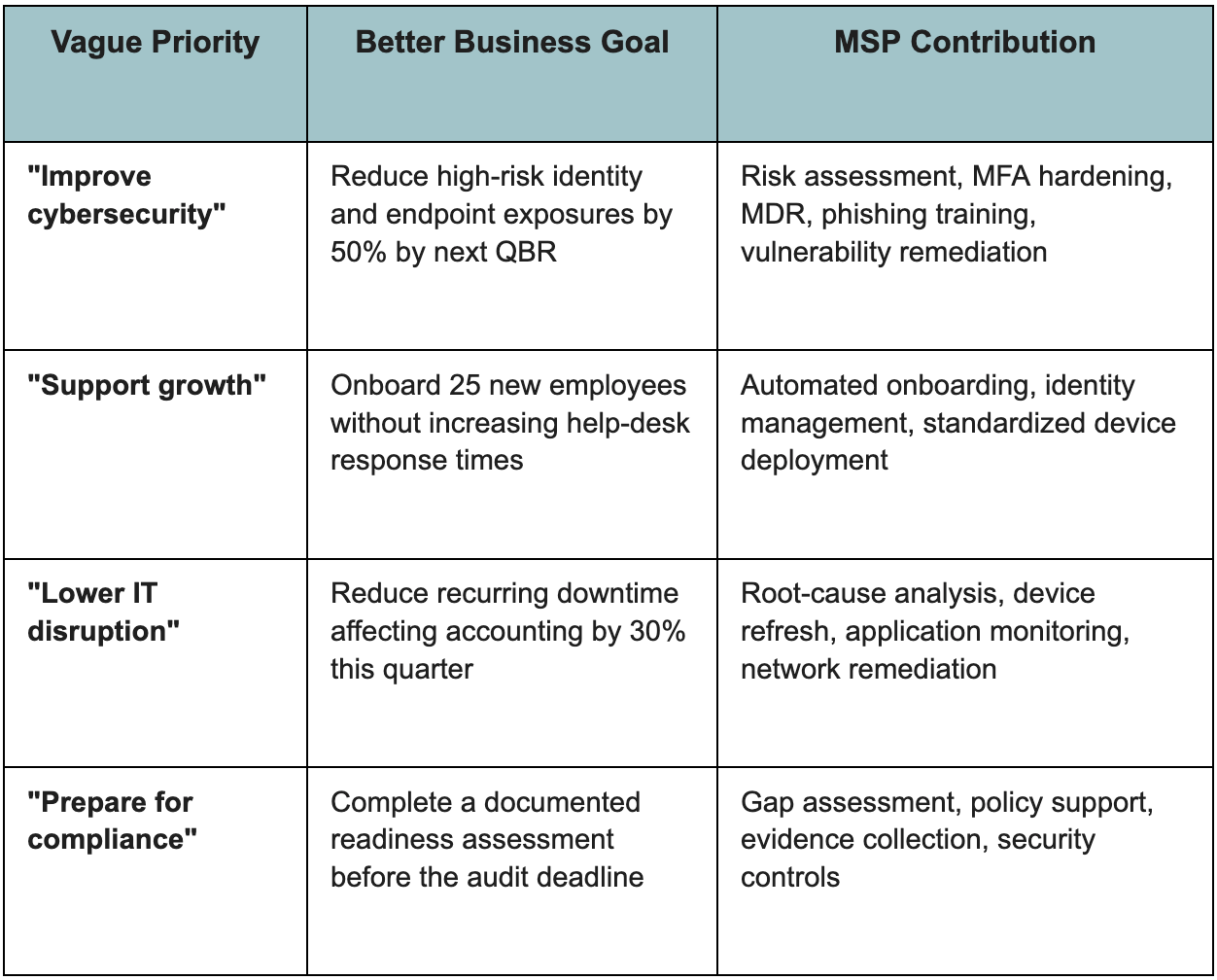
Clients often express goals in broad terms: “We need better security,” “We want fewer IT problems,” or “We want to grow without adding complexity.” These are useful starting points, but they are not actionable.
Your role is to translate vague requests into outcomes that are specific, measurable, and time-bound:
Build a Living Client-Goals Record
Do not bury strategic goals inside a slide deck or rely on an account manager’s memory. Maintain a central customer-goals record shared across sales, service, project teams, and leadership.
For every stated priority, record:
The goal in the client’s language and executive owner
The business driver (why it matters now)
Baseline metrics vs. target outcome and deadline
Current status, risks, and blockers
Recommended MSP actions and next review date
This record prevents a common MSP failure: presenting a technically sound recommendation for a problem the customer no longer cares about.
Use Operational Data to Validate the Story
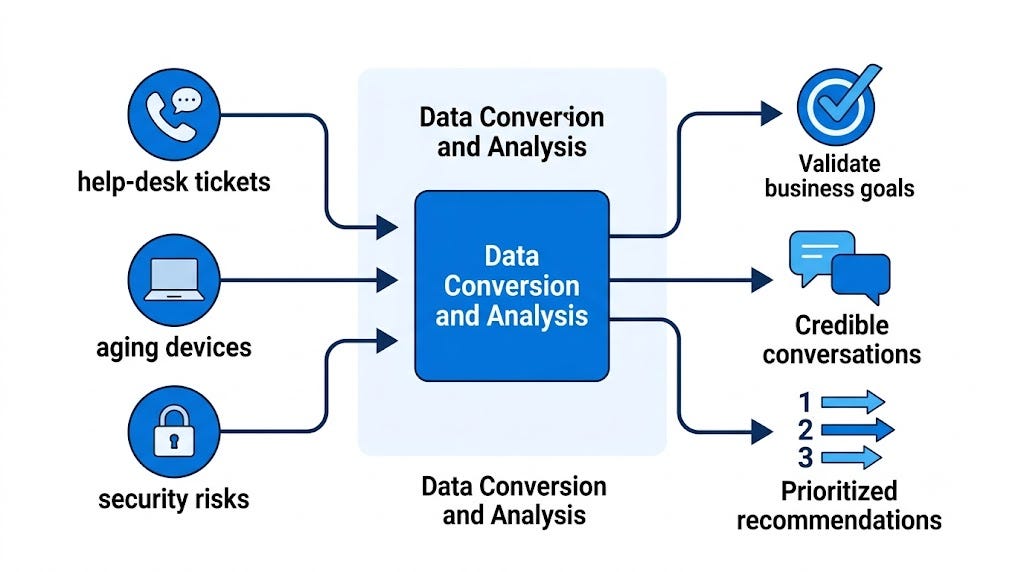
Business goals lead the conversation, but your operational data builds credibility. Before the meeting, pull evidence that directly aligns with—or challenges—their stated goals:
Productivity Loss: Repeated help-desk issues pointing to broader bottlenecks.
Reliability Risks: Aging devices, infrastructure gaps, or failed backups.
Capacity Trends: Utilization metrics across applications, licenses, and storage.
Forward Drivers: Upcoming warranties, compliance deadlines, or renewal dates.
If their goal is growth, highlight where technology will bottleneck as they scale. If their goal is cost control, pinpoint recurring inefficiencies draining budget.
Make Follow-Up Part of the QBR
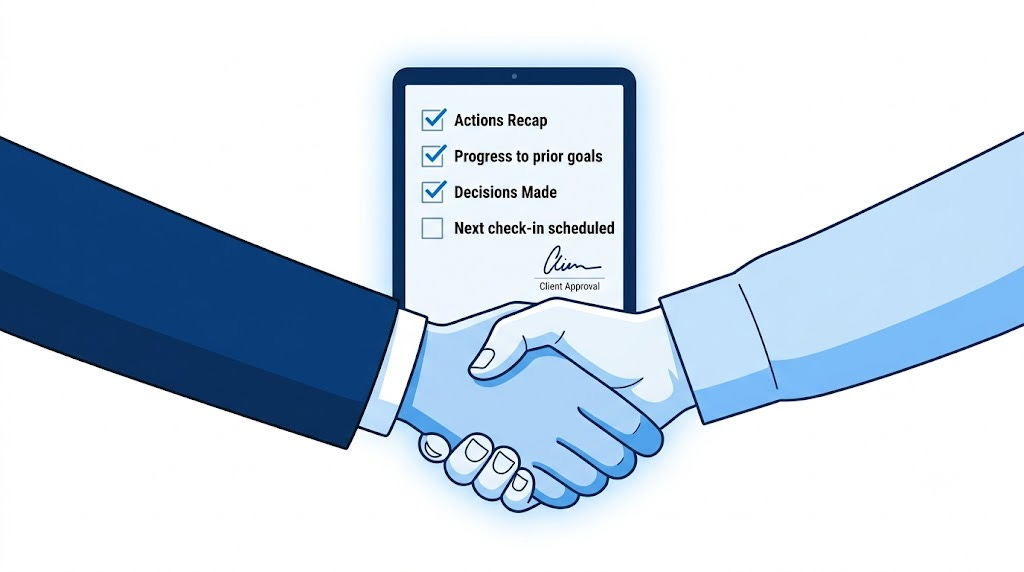
A goal captured during a meeting is only valuable if it drives action afterward. Within 24 hours of the meeting, send a concise recap detailing:
Confirmed business priorities
Decisions made and progress on past commitments
Recommended actions with named owners (on both sides)
Key deadlines and the next check-in date
Lock in the follow-up meeting immediately. When MSPs deliver a great QBR but wait until the next quarter to revisit recommendations, urgency fades and opportunities disappear.
The Real Opportunity
The best MSP upsell is never a surprise product pitch at the end of a deck. It is the natural result of understanding what the customer is trying to achieve, measuring progress together, identifying operational gaps, and showing a clear path forward.
Before finalizing your next QBR deck, ask yourself: Are we presenting what we know about the client, or what the client needs next?
If you can’t answer with confidence, put down the deck and pick up the phone.
What’s your biggest hurdle when running QBRs with strategic accounts? Drop a comment below or share your team’s approach.
Disclaimer: The core ideas within this article are the original work of the author, reflecting real-world experience in the IT services sector. AI was utilized as a collaborative tool to assist in data structuring, drafting and refining the presentation of these concepts.
1https://www.msp360.com/resources/blog/msps-guide-to-upselling/
Ready to stop reacting and start predicting?
See how Prioriwise turns your delivery data into a live Relationship Health Score for every client.
Get Started