How Customer Success Drives MSP Revenue, Renewals and Upsells
Why customer success is the engine behind stable recurring revenue in modern MSPs
Customer Success as a Revenue Engine, Not a Cost Center
For a long time, many MSPs viewed customer success (when it existed at all) as a “nice-to-have” support layer—something that made clients feel good but did not clearly tie back to revenue. In 2025, that mindset is flipping. The most resilient MSPs now treat customer success as a core revenue function because, as Gainsight explains, a large share of recurring revenue now comes from renewals and expansion. This function protects recurring income, surfaces expansion opportunities, and shortens sales cycles by building trust before sales even enters the conversation.
As Trumpet highlights, CS has shifted from “nice-to-have” to a primary growth driver. Instead of asking, “How many tickets did we close?” these MSPs ask, “How many clients renewed, expanded, and referred us this quarter—and what did we do to earn that?” Customer success provides the structure and data to answer that question with confidence.
Revenue Starts With Retention
Recurring revenue businesses live and die by retention. A client who stays for five years is far more valuable than a new logo that churns after twelve months. Customer success directly improves retention by making sure clients feel guided, supported, and confident in the value they receive. This high retention is a hallmark shared by the top-earning MSPs, as shown in the 2025 MSP Business Trends Report.
In a customer-success-driven MSP, retention is protected through:
Proactive check-ins instead of waiting for complaints.
Clear communication during changes, incidents, and major initiatives.
Transparent reporting on performance, risks, and improvements.
When clients regularly see that you are on top of their environment and invested in their long-term success, they are far less likely to shop around. According to MSP Success’s 2025 Survival Predictions, structured, proactive engagement is the key defense against revenue loss in tightening markets. Retention stops being a surprise and becomes a predictable outcome of how you operate.
Making Renewals a Confirmation, Not a Negotiation
Many MSPs dread renewal season because it turns into a pricing debate. That usually happens when the client only hears from you during outages, projects, or invoice disputes. Without a clear record of ongoing value, the relationship feels transactional—and transactions are always up for renegotiation.
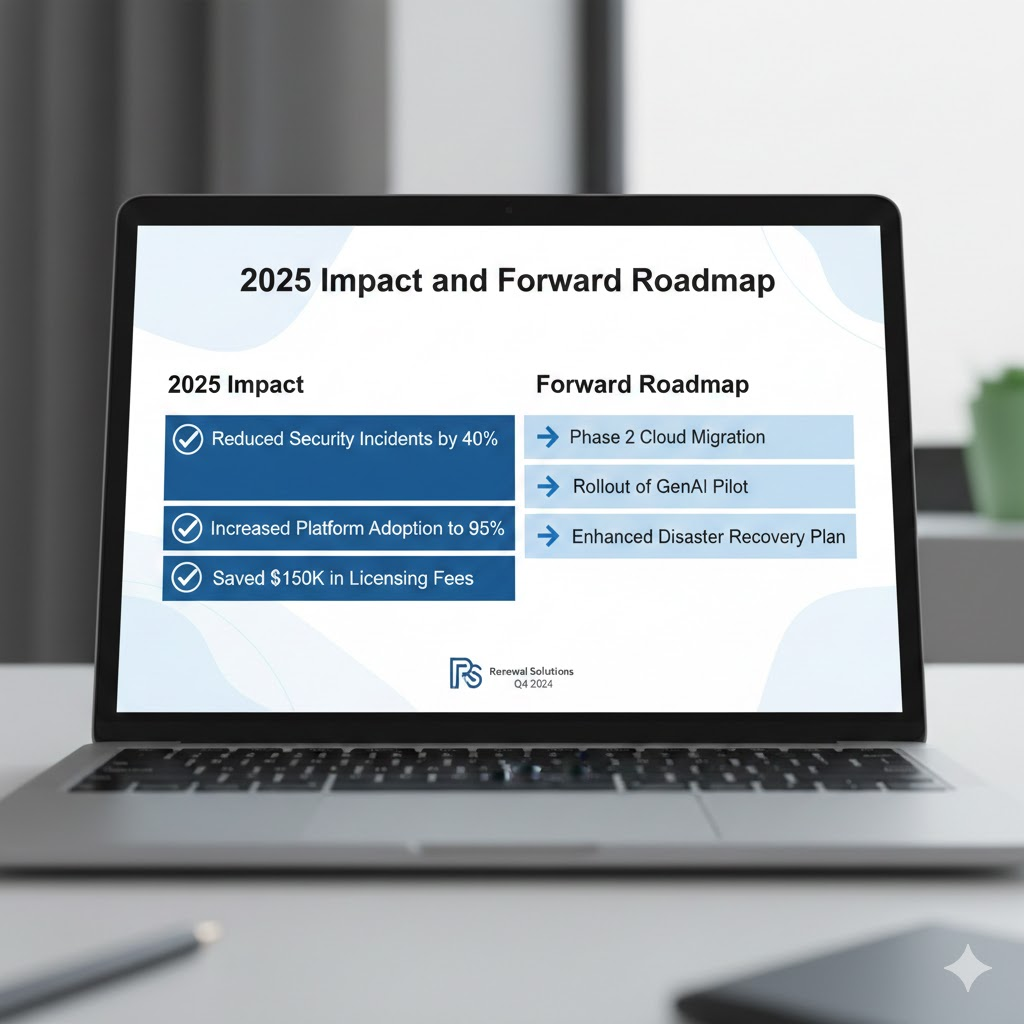
Customer success flips this dynamic by building a year-long narrative of value. As Renewtrak details, CS teams can manage renewals as a disciplined, forecastable motion rather than a last-minute negotiation.
Regular updates show what has been done and why it mattered.
Health reviews highlight risk reduction, incident trends, and adoption gains.
Roadmap discussions align your work with the client’s future plans.
By the time renewal comes up, nothing in the conversation is new. The decision-maker has seen progress throughout the year and understands what is planned next. The renewal becomes more of a confirmation—“Yes, let’s keep going”—than a defensive exercise in justifying your fees.
How Upsells Become Natural, Not Pushy
The best upsell conversations do not feel like selling at all—they feel like problem-solving. Totango’s analysis on Customer-Led Growth explains that CS is increasingly empowered to drive these expansions. Customer success sets that stage by keeping a close view on client goals, pain points, and usage patterns. When you understand where the client is trying to go and where their current setup is falling short, upsell options emerge organically.
Examples of natural upsell triggers:
Repeated security incidents highlighting the need for additional protections.
High ticket volume around a legacy tool suggesting a modernization project.
Growth plans (new locations, new teams) that current infrastructure cannot comfortably support.
Because customer success managers or account leads are in regular, trust-based contact, they can frame upsells as “Here is how we can prevent this from becoming a bigger problem” or “Here is how we can help you reach that goal faster,” rather than “Here is something else we would like you to buy.” As Salesmotion details, using usage data and client goals to surface opportunities dramatically increases acceptance rates.
Using Data to Spot Revenue Opportunities Early
Customer success turns operational data into revenue insight. Every ticket, alert, and usage metric is a clue about what the client needs next. Instead of letting that data sit in isolated tools, forward-thinking MSPs consolidate and interpret it through a customer-success lens.
As Custify’s Customer Success Statistics demonstrate, health scores and NRR are essential for managing renewal and expansion across a portfolio.
Common data-driven opportunities include:
Ticket trends indicating where automation or training would reduce noise.
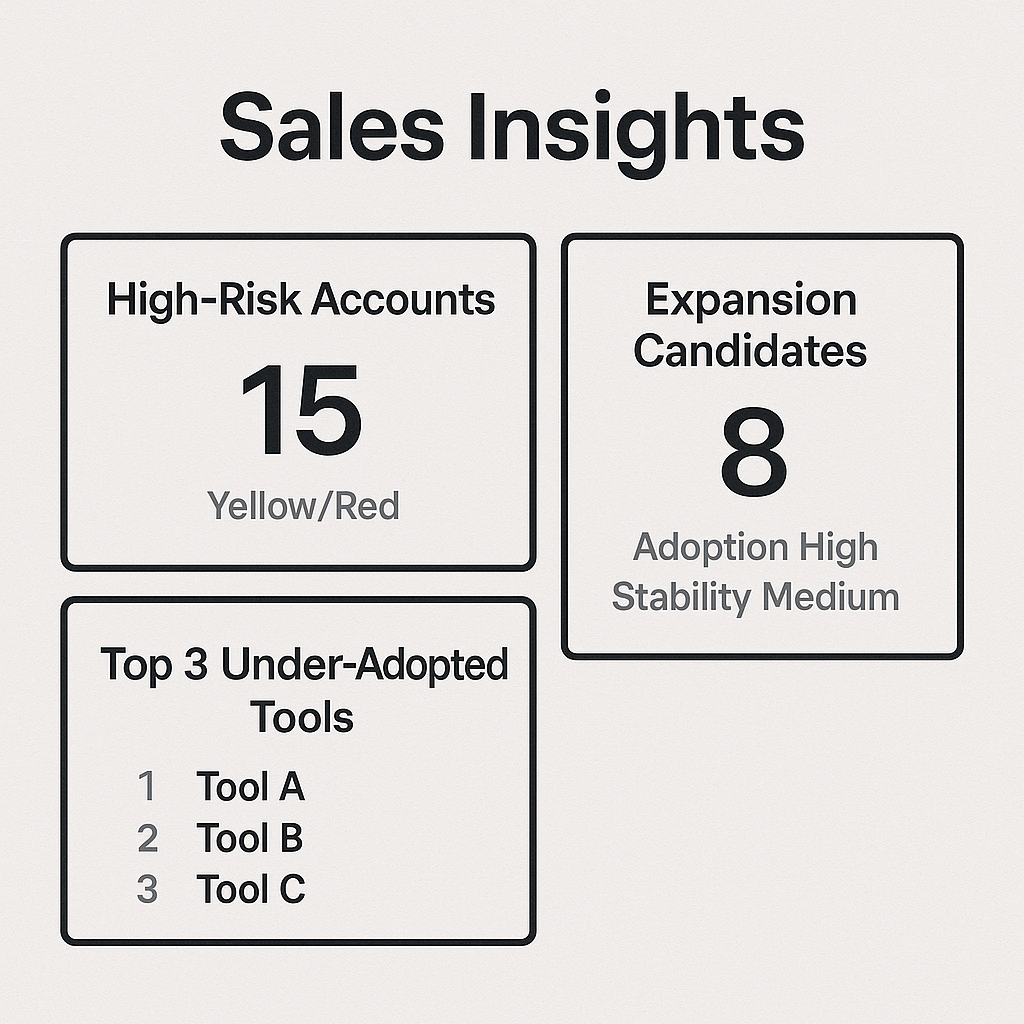
Underused tools pointing to the need for enablement—or a better-fit replacement.
Recurring security exceptions suggesting a managed security add-on.
High adoption and satisfaction in one team that could be replicated in another.
By reviewing these patterns regularly, your team can proactively bring recommendations to clients before problems escalate or budgets are locked. You are no longer reacting to RFPs—you are shaping the roadmap.
Shortening Sales Cycles Through Ongoing Relationship Insight
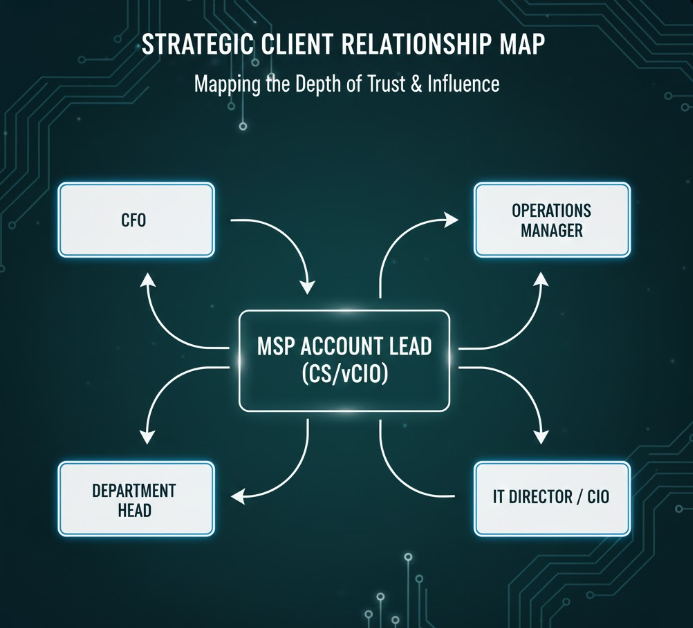
Customer success teams (or customer-success-minded account leads) are often closer to the client than sales is. They know the stakeholders, internal politics, upcoming initiatives, and budget rhythms. This context is gold when it comes to accelerating deals. The convergence of CS and the revenue cycle, detailed by Forbes, confirms that managing the full customer journey drives long-term growth.
Because they:
Understand who actually feels the pain day to day.
Know which executives champion or block change.
Hear about upcoming projects months before they are publicly discussed.
They can help shape proposals that feel timely and well-aligned. By the time a formal quote is on the table, key people have already been warmed up through conversations about goals and challenges. Objections are handled early, and decisions tend to come faster because the internal groundwork is already laid.
Better Forecasting Through Health and Lifecycle Visibility
Revenue predictability is one of the biggest advantages of a mature customer success function. When you have a clear picture of client health, renewal dates, and likely expansions, forecasting stops being guesswork. As ChurnZero explains, CS uses health, sentiment, and upsell metrics to produce accurate renewal and expansion forecasts.
A basic customer-success-informed forecast model might consider:
Account health scores (green/yellow/red).
Renewal timing and historical renewal behavior.
Pipeline of identified expansion ideas (with confidence levels).
Leading indicators like ticket volume trends, sentiment, and stakeholder engagement.
This allows MSP leaders to anticipate revenue risk, plan hiring responsibly, and prioritize which accounts need attention long before contracts are at risk. Instead of reacting to surprise cancellations or last-minute expansion requests, you manage your business with a forward-looking view.
Turning Customer Success Into a System, Not a Heroic Effort
The real magic happens when customer success is baked into how your MSP operates, not strapped on as an individual hero role. That means:
Documented playbooks for onboarding, QBRs, renewals, and expansion conversations.
Standard health metrics that every account is measured against.
Async-first workflows that keep everything visible and reduce reliance on meetings.
Tools like Prioriwise.ai help operationalize this by giving your team a shared, structured space for client work. Moxopositions CS teams as strategic drivers who need scalable processes. Prioriwise.ai provides this through:
Playbooks run as checklists and workflows, so nothing gets missed.
Updates and decisions are captured in context, not lost in email threads.
Patterns and risks become easier to see across multiple accounts.
With that foundation, customer success becomes a dependable engine of retention, renewals, and upsells—not a set of one-off heroics from your “best” account managers.
Final Thoughts
Customer success is no longer just about keeping customers happy—it is about building a growth engine on top of your recurring revenue base. MSPs that treat it as a strategic function see higher retention, smoother renewals, and more frequent, better-aligned upsells. Those that ignore it risk being seen as interchangeable vendors, fighting over price instead of being chosen for impact.
Ready to stop reacting and start predicting?
See how Prioriwise turns your delivery data into a live Relationship Health Score for every client.
Get Started